



EU Leaders Divided Over Loan to Ukraine Using Seized Russian Assets
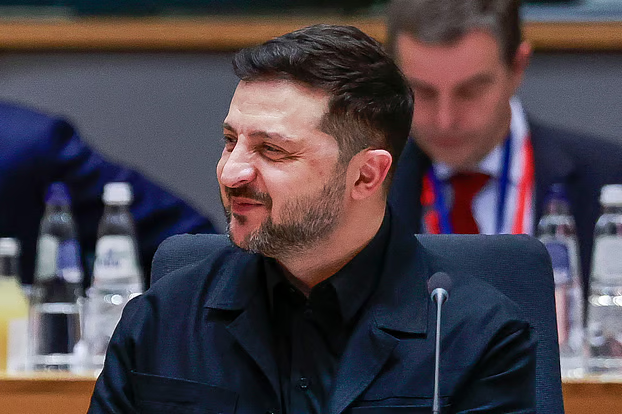
European Union (EU) leaders are meeting in Brussels on Thursday amid growing divisions over whether frozen Russian assets should be used to provide loans to Ukraine to meet its urgent military and economic needs. The issue has become one of the most sensitive and complex debates within the bloc as the war in Ukraine continues and financial pressure on Kyiv intensifies.
Since Russia launched its full-scale invasion of Ukraine in February 2022, the EU, alongside its allies, has imposed sweeping sanctions on Moscow. As part of those measures, Russian state assets held within EU jurisdictions were frozen. According to EU officials, around €210 billion worth of Russian assets are currently immobilized across the bloc, making it one of the largest pools of frozen sovereign funds in the world. A significant portion of this money is held by Euroclear, a Belgium-based financial services company that specializes in securities settlement and fund administration.
The central question facing EU leaders is whether these frozen assets—or the profits generated from them—can be used legally and responsibly to support Ukraine. Kyiv has repeatedly called on Western allies to use Russian funds to help finance its defense, reconstruction, and economic stability, arguing that Russia should bear the cost of the destruction caused by the war.
Supporters of the proposal within the EU argue that providing loans to Ukraine backed by frozen Russian assets would be a practical and morally justified step. They contend that Ukraine’s needs are immediate and vast, ranging from military equipment and ammunition to budgetary support for public services and long-term reconstruction. With Western aid packages facing political hurdles in some countries, proponents see the Russian assets as a viable alternative source of funding.
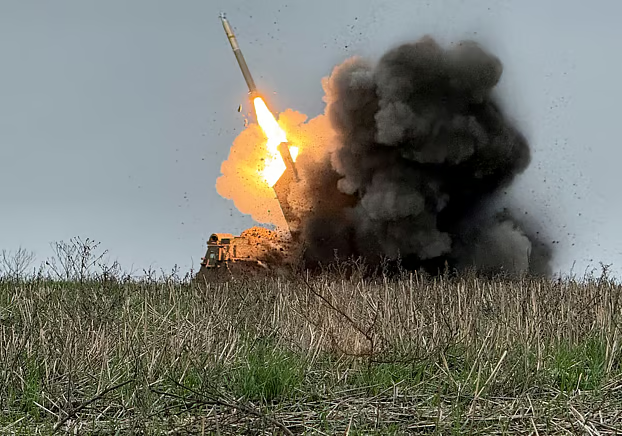
Several EU member states believe that using the interest or windfall profits generated from the frozen assets could offer a compromise solution. These profits have accumulated as the assets remain immobilized, particularly those managed by Euroclear. According to estimates, the interest income alone could amount to billions of euros annually. Supporters say channeling this money to Ukraine would avoid directly confiscating the principal amount, potentially reducing legal risks.
However, the proposal has also met strong resistance from a number of EU countries, including Belgium, where a large share of the assets is held. Opponents warn that using frozen sovereign assets—even indirectly—raises serious legal concerns under international law. They argue that such a move could set a dangerous precedent, undermining confidence in the global financial system and the rule of law.
Belgium has been particularly cautious, citing the potential legal liability that could fall on Euroclear and the Belgian state if Russia were to challenge the use of its assets in international courts. Belgian officials have stressed that any decision must be legally sound and coordinated at the EU level to avoid unilateral risks.
Other member states share similar concerns, fearing that confiscating or leveraging frozen assets could prompt retaliation from Russia or discourage foreign governments from holding assets in Europe in the future. Critics also worry that such actions could weaken the eurozone’s reputation as a safe and predictable financial environment.
The European Commission has been exploring various legal frameworks to address these concerns. One option under discussion is providing loans to Ukraine that would be repaid using future revenues generated from the frozen assets, rather than transferring the assets themselves. This approach is seen as a way to balance Ukraine’s urgent needs with legal caution.
EU officials acknowledge that the debate reflects broader tensions within the bloc over how far it should go in confronting Russia economically while safeguarding its own financial stability. While there is broad political support for Ukraine across the EU, translating that support into concrete financial mechanisms has proven challenging.
The Brussels meeting is also taking place against the backdrop of increasing pressure from Ukraine and its allies, including the United States, to find sustainable funding solutions. Ukrainian leaders have warned that delays in financial assistance could have serious consequences for the country’s defense and economy, especially as the war drags on with no clear end in sight.
Public opinion across Europe remains largely supportive of Ukraine, but governments are increasingly mindful of domestic economic pressures, rising costs, and voter concerns. These factors have added another layer of complexity to the decision-making process.
Diplomats say it is unlikely that EU leaders will reach a final decision during this meeting, but they expect progress toward a compromise. Any agreement would require consensus among member states, a process that could take weeks or even months.
For now, the frozen Russian assets remain at the center of a high-stakes debate that blends law, politics, economics, and geopolitics. As the EU weighs its options, the outcome will not only shape Ukraine’s financial future but could also redefine how international sanctions and sovereign assets are handled in times of conflict.
About The Author


https://shorturl.fm/euQfi
Здорова, народ. Брат снова сорвался. Мать на грани нервного срыва. Платная клиника — огромные счета. Короче, реально крутые специалисты — капельница от запоя на дому. Примчались за 20 минут. В общем, вся инфа по ссылке — вывод из запоя санкт петербург https://vyvod-iz-zapoya-na-domu-sankt-peterburg-msy.ru Звоните прямо сейчас. Перешлите тем, кто рядом с бедой.
Слушайте кто ищет выход Каждое утро как каторга Ребёнок раздражённый Короче, нашли идеальное решение — онлайн класс с 1 по 11 класс Ребёнок занимается с удовольствием В общем, вся инфа вот здесь — ломоносов школа онлайн [url=https://shkola-onlajn-wqe.ru]https://shkola-onlajn-wqe.ru[/url] Переходите на нормальное обучение Перешлите другим родителям