






Zelensky Heads to NATO Meeting in Turkey Seeking More Air Defence Support
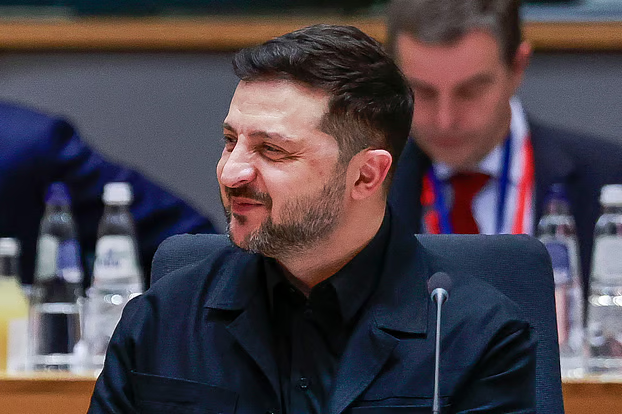
Ukrainian President Volodymyr Zelensky is preparing to make a direct appeal to NATO allies for additional air defence systems, according to BBC News, as Ukraine continues to face intense bombardment from Russian forces.
Zelensky is expected to use an upcoming NATO meeting being held in Turkey as a platform to press member states for more interceptor missiles. The request comes against the backdrop of a sharp escalation in Russian strikes, which have placed enormous strain on Ukraine’s existing air defence capabilities.
According to BBC News, the Ukrainian leader’s core argument will centre on the urgent need to replenish and expand Ukraine’s stockpile of interceptor missiles — the ammunition used by air defence systems to shoot down incoming Russian projectiles. Without a steady and sufficient supply of these missiles, even the most sophisticated defence platforms become limited in their effectiveness.
The timing of Zelensky’s appeal is significant. Russia has intensified its aerial assault on Ukrainian territory, launching waves of drones and missiles targeting both military infrastructure and civilian areas. Ukraine’s air defence networks have been working around the clock to intercept these threats, but the sheer volume of Russian attacks means that interceptor supplies are being depleted at a rapid rate.
NATO member countries have previously provided Ukraine with a range of air defence systems and associated ammunition, but Ukrainian officials have repeatedly warned that the demand far outpaces what has been supplied. Zelensky’s appearance at the Turkey meeting signals that this gap remains critically wide.
The choice of Turkey as the host for this NATO gathering adds a layer of diplomatic complexity. Turkey, a long-standing NATO member, has maintained a distinct foreign policy posture throughout the conflict, engaging with both Kyiv and Moscow and positioning itself as a potential mediator. Whether that dynamic will influence the discussions around Ukraine’s requests remains to be seen.
For Zelensky, the stakes could not be higher. Air defence is not simply a military priority — it is deeply tied to civilian morale and the protection of urban populations. Every successful interception of a Russian missile or drone represents lives saved and infrastructure preserved. Conversely, every gap in coverage can result in catastrophic losses.
NATO allies will be weighing their own production capacities and strategic reserves as they consider Ukraine’s requests. Several European nations have acknowledged that defence manufacturing has struggled to keep pace with wartime consumption rates, a challenge that affects not only Ukraine but the broader readiness of the alliance.
Zelensky has consistently used high-profile international gatherings to make the case that supporting Ukraine is not charity but a collective security investment. His argument is that a well-defended Ukraine reduces the likelihood of the conflict spilling beyond its borders and drawing NATO members into a more direct confrontation with Russia.
As the Turkey meeting approaches, all eyes will be on which nations step forward with concrete pledges and whether the collective response matches the urgency that Ukraine’s president is expected to convey with force and clarity.
Source: BBC News
About The Author
